Crawl Space Encapsulation in Greenville & Western PA
A combined moisture-control, air-sealing, drainage, and humidity-management system engineered for Western Pennsylvania's cold, wet, seasonally saturated conditions.
Get a Free Estimate
Tell us about your crawl space needs.
Crawl Space Encapsulation in Western PA
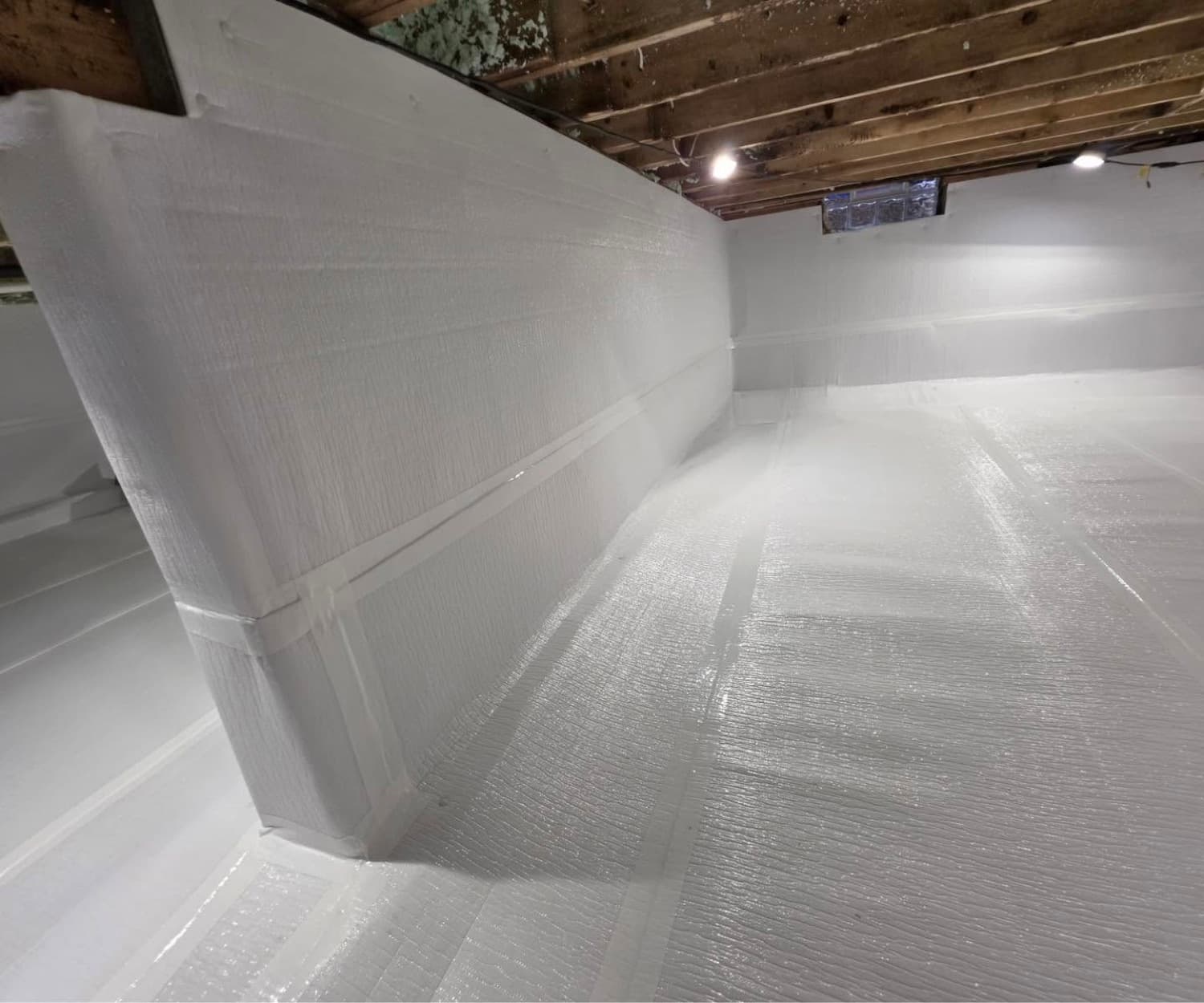
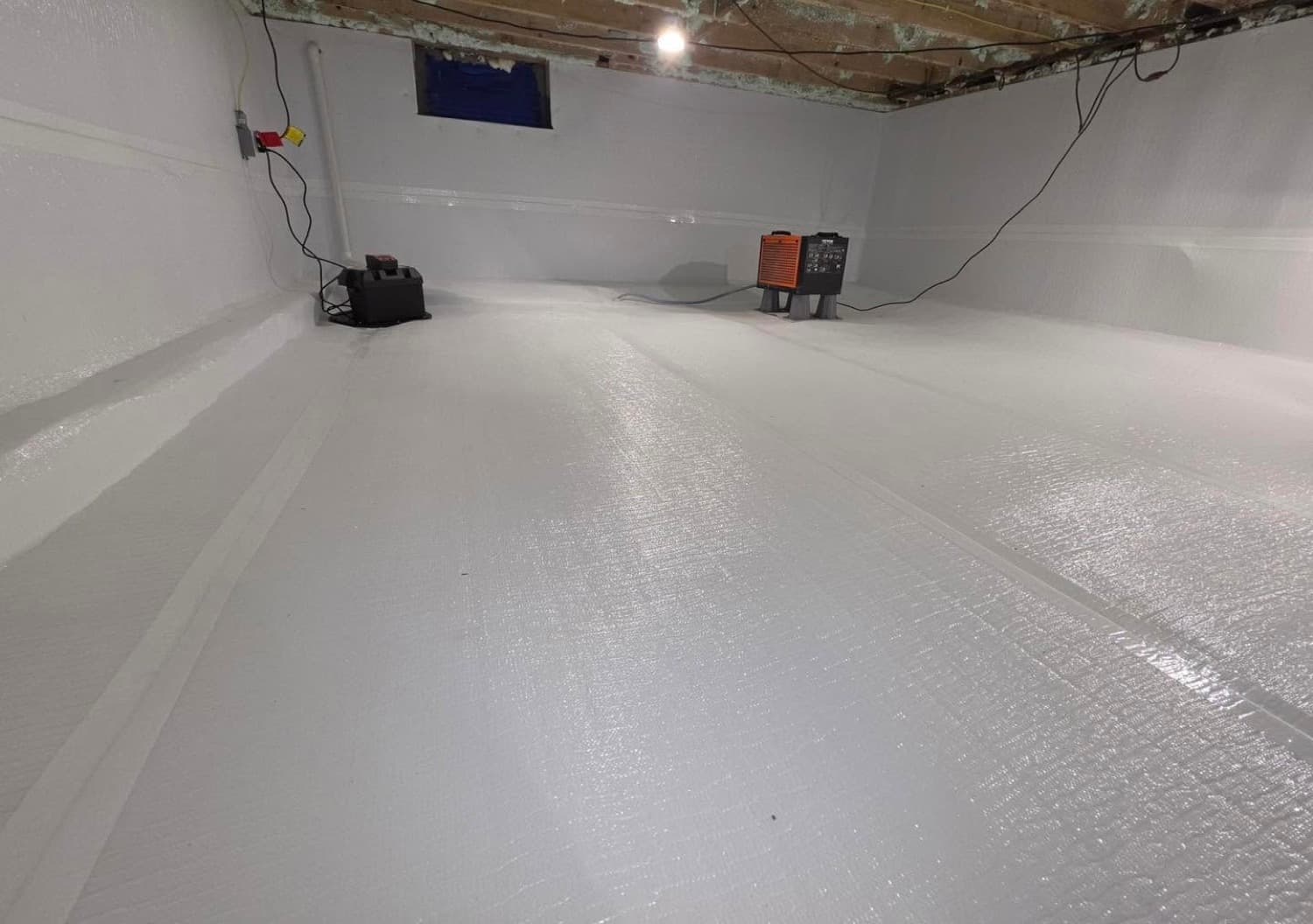
Crawl space encapsulation in Western Pennsylvania is not a liner install. It's a building science system that addresses three things at once: ground moisture rising from poorly drained Ravenna, Frenchtown, Canfield, and Conneaut series glacial soils; summer indoor air with relative humidity that reaches 80% in June, 83% in July, and 86% in August in published NWS Pittsburgh climatological tables; and winter freeze-thaw stress on penetrations and condensation-prone surfaces. Building Science Corporation's research on conditioned crawlspaces is the cleanest summary of why this matters: the floor between the crawl space and the house is never perfectly airtight, so whatever lives in your crawl space is also in the air your family breathes. The fix is to bring the space fully inside the home's thermal and moisture envelope with a continuous sealed liner, mechanical drying, and drainage integration.
What We Provide
Signs You Need Crawl Space
If you notice any of these warning signs, contact us for a free inspection.
Persistent Musty Smell on the First Floor
Stack effect pulls roughly 30 to 50 percent of the air on your first floor up from the crawl space. If your first floor smells musty, the crawl space is the source until proven otherwise. Building Science Corporation documents this air migration as a primary driver of indoor air quality problems in vented crawl spaces.
Summer Humidity Your HVAC Cannot Control
When indoor relative humidity stays above 60 percent even with the AC running, an open vented crawl space is usually pulling in outdoor air that is wetter than the crawl space air. Western PA mornings frequently see relative humidity in the 80 to 86 percent range from June through August (per NWS Pittsburgh climatological tables), and that moisture loads the entire home from below.
Sagging or Bouncy Floors Above the Crawl
Wood is hygroscopic, meaning it absorbs water vapor from the surrounding air. Sustained high humidity in the crawl space causes joists and subfloor to gain moisture, lose strength, and develop the soft or bouncy feel you can detect by walking. Visible saggy framing means the moisture problem has been chronic for years.
Condensation on Pipes, Ductwork, or Joists
Visible water beads on cold surfaces signal that the dew point of the crawl space air is above the surface temperature. ASHRAE damp-buildings research recommends keeping indoor dew point below 60 degrees Fahrenheit to prevent mold growth. In an unsealed Western PA crawl space, summer dew points routinely run higher than that.
Rust on Mechanicals or White Mineral Deposits on Walls
Efflorescence (white mineral powder on block or concrete) means water is moving through the masonry. Rust on water heater bases, furnace cabinets, or duct hangers means the air is humid enough to corrode metal. Both are late-stage symptoms of an unsealed crawl space.
Pest or Termite Activity
Termites, carpenter ants, and rodents thrive in dark, damp, low-airflow environments. A properly encapsulated crawl space with sealed vents and a tight liner perimeter removes the conditions they need to establish.
How Our Crawl Space Process Works
Inspection and Moisture Mapping
We measure ambient relative humidity and dew point, moisture content in joists and subfloor with a pin meter, check for standing water and drainage paths, document insulation condition, and identify mold, pest, or structural damage that needs remediation before liner installation. We also map your specific NRCS soil series so we can predict seasonal water table behavior.
Bulk Water Control and Remediation
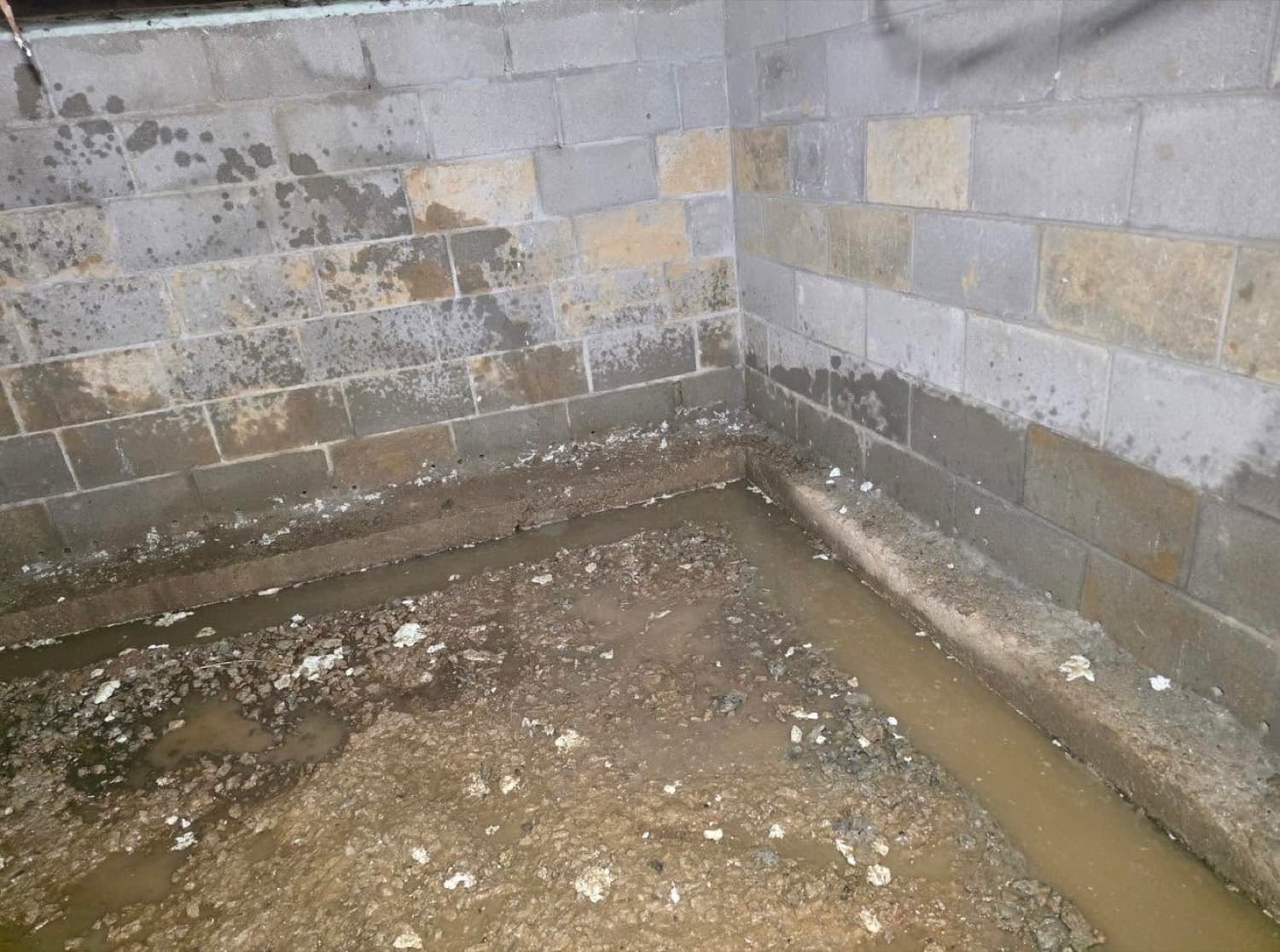
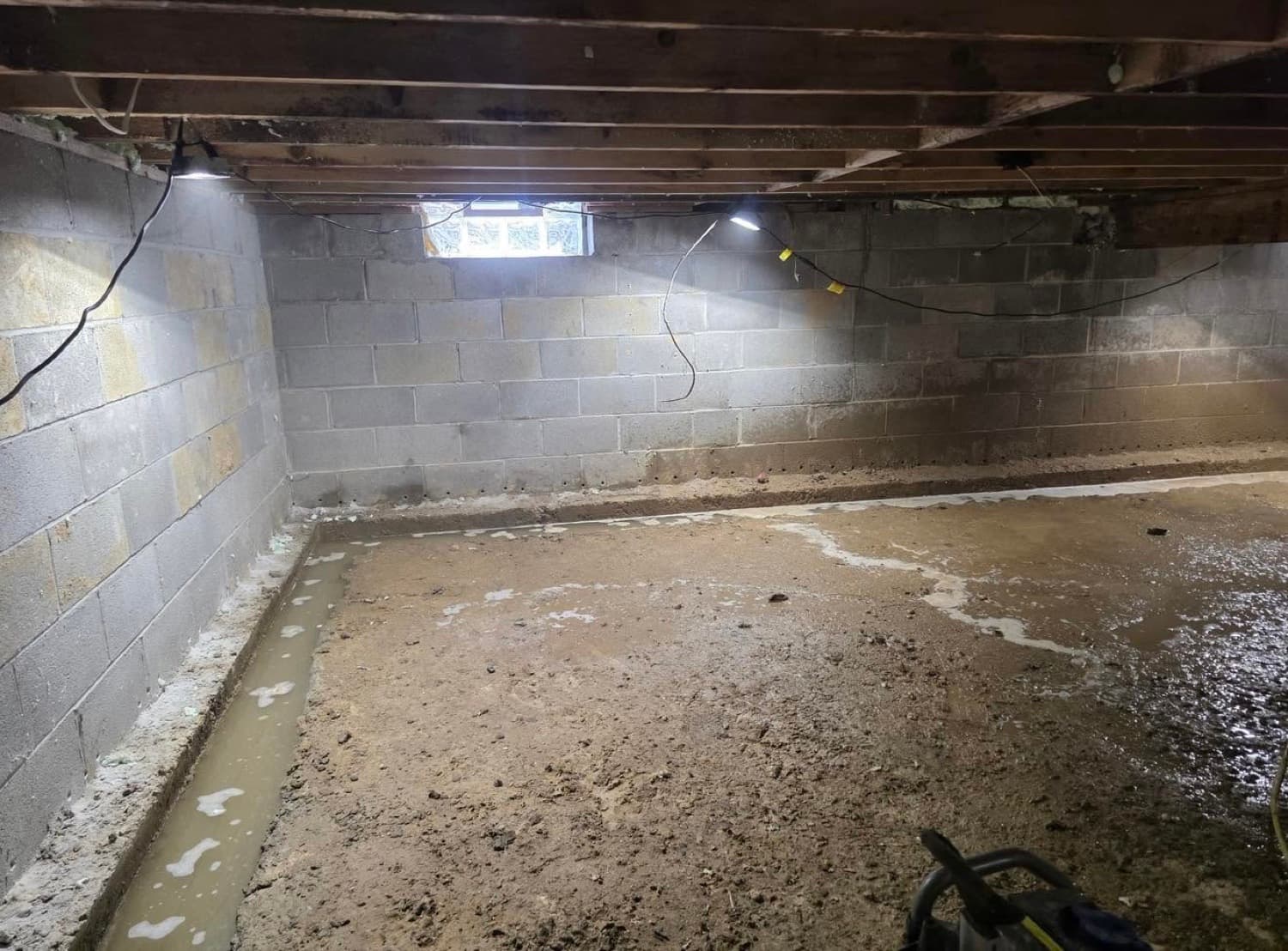
Encapsulation is not a substitute for bulk-water control. If there is seepage or standing water, we install or repair perimeter drainage and a sump basin first. We also remove debris, address any mold or wood rot, repair structural problems, and apply borate or similar treatments where active wood-destroying organism activity is present.
Liner and Air-Seal Installation
We install a 20-mil reinforced vapor barrier across the entire floor with a minimum 6-inch seam overlap sealed with manufacturer-spec tape, extend it up the foundation walls, mechanically fasten and seal at the termination, and detail all penetrations and columns with boots or patches. The rim joist gets air-sealed separately because that is where most stack-effect air leakage happens. This follows the StegoCrawl and similar manufacturer installation procedures.
Mechanical Drying and Conditioning
Once the space is sealed, the air has to be controlled. We size a dedicated crawl space dehumidifier (typically 70 to 95 pints per day, models like the Aprilaire 1830 or 1850 with energy factors of 1.91 to 2.2 liters per kWh) to the actual sealed volume and historical wetting. The dehumidifier drains by gravity to the sump or a floor drain. Insulation on the foundation walls (not the floor above) maintains the conditioned envelope, with R-values matched to the currently enforced Pennsylvania UCC/IECC provisions.
Verification and Documentation
We measure post-install relative humidity (target 50 to 55 percent), confirm dew point is below 60 degrees Fahrenheit, test dehumidifier drain and high-water alarms, and document the system with photos and specifications. The encapsulation comes with our lifetime transferable warranty.
Recent Crawl Space Work in Western PA
Crawl Space Questions Answered
Common questions about our services. Can't find your answer? Call us.
How much does crawl space encapsulation cost in Western PA?
National benchmarks from HomeAdvisor put basic encapsulation at $2 to $4 per square foot and more extensive jobs (bulk water control, structural repair, drainage integration) at $3 to $10 per square foot. Angi's average project is roughly $5,500 with most installations falling in the $5,000 to $15,000 range. Where your project lands depends on crawl space size, soil and water conditions, whether remediation is needed first, and the dehumidifier and drainage spec. We provide a free, itemized in-home estimate with the specific brand, mil thickness, and dehumidifier model written into the proposal.
Why do you use a 20-mil vapor barrier instead of cheaper sheeting?
The better predictor of liner survivability is published ASTM performance data, not thickness alone. A reinforced 20-mil product like Stego Wrap 20-mil publishes 0.0071 perms (ASTM E96) and over 3,500 grams of puncture resistance (ASTM D1709). Compare that to budget 6-mil poly at roughly 0.04 perms and 1,056 grams. In a Western PA crawl space that may be walked on for service, has rough subgrade, and sees 80-plus percent humidity loading six months a year, the heavier reinforced liner is the right call. Cheaper liners tear, lose their seal, and need replacement.
Should crawl space vents be open or closed?
Closed. The U.S. Department of Energy's Building America program, ASHRAE, and Building Science Corporation all reach the same conclusion: vented crawl spaces underperform sealed conditioned crawl spaces on safety, health, comfort, durability, and energy use, especially in humid summer climates. The hybrid case (partially vented, partially sealed) is the worst of both worlds. Building Science Corporation's rule is 'either fully in or fully out.' For Western PA, fully sealed and mechanically dried is the right answer.
Do I need a dehumidifier or will the sealed liner be enough?
A sealed liner alone is not enough in Western Pennsylvania. The IRC recognizes four acceptable moisture-control approaches for sealed crawl spaces: a permanent dehumidifier, supply air from the HVAC, conditioned air from the space above, or mechanical exhaust drying. For most Greenville-area homes, a permanent dehumidifier is the most reliable choice because it directly controls relative humidity without depending on outdoor air. We typically size 70 ppd units (Aprilaire 1830, Santa Fe Compact70) for smaller sealed spaces and 95 to 109 ppd units (Aprilaire 1850, SaniDry XP) for larger or leakier ones.
What about insulation? Floor above or foundation walls?
Walls. In a sealed conditioned crawl space, foundation wall insulation is the right approach (DOE Building America guidance). Floor-above insulation is appropriate only in genuinely vented crawl spaces. DOE recommends R-25 as a minimum for most of the country for basements and crawl spaces, but Pennsylvania's currently enforced UCC/IECC provisions are what we actually design to. The 2018 IECC applies to most current work and the 2021 code review cycle update became effective January 1, 2026, so we verify the exact R-value to the local code official's enforcement.
How long does a sealed crawl space last?
A reinforced 20-mil liner installed to manufacturer spec lasts 20 to 25 years or more. Dehumidifiers typically run 8 to 12 years before replacement (Aprilaire and Santa Fe models in this class are designed for that range). The sealing tape and termination details are the most common failure points and can be inspected and re-tapped during periodic service. Our installations include a lifetime transferable warranty on the encapsulation system itself.
Will encapsulation lower my energy bills?
Most of our customers see a meaningful reduction in heating and cooling costs after encapsulation because the conditioned envelope no longer pulls in outdoor air from a hot/humid or cold/leaky crawl space. The actual savings vary with home size, HVAC efficiency, and how leaky the previous vented crawl was, so we don't promise a specific percentage. The other benefits (mold prevention, structural longevity, indoor air quality) are usually the larger long-term value.
You May Also Need
Schedule Your Free Crawl Space Estimate
Get a free inspection and honest assessment. No pressure, no obligation. Just straightforward answers.